Korean Pavilion Venice Biennale 2026: ‘Liberation Space’ Opens
The Korean Pavilion Venice Biennale 2026 opened with “Liberation Space: Fortress/Nest” — an installation by artists Choi Go-en and Ro Hye-ree that uses red industrial pipes bursting through walls and translucent organza pieces to ask what “liberation” means after recent South Korean political turmoil. Curated by Binna Choi and commissioned by Arts Council Korea, the pavilion sits within Venice’s Giardini, sharing a hedge border with the Japanese pavilion. For travelers in Europe this summer or fall, it’s one of the more pointed entries in this year’s “Minor Keys” theme.
What the Korean Pavilion Venice Biennale 2026 actually presents
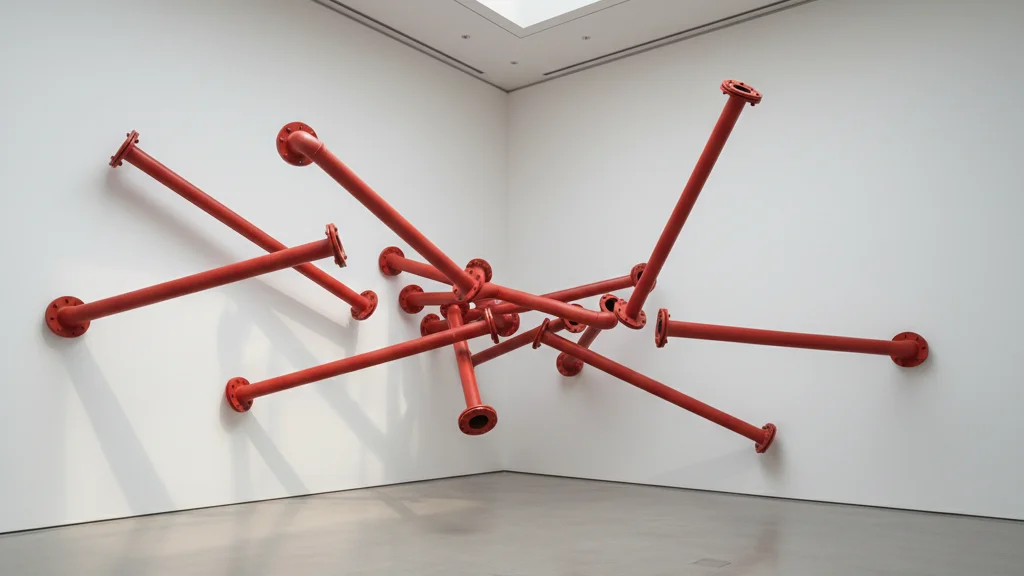
Per Korea Herald’s coverage, the exhibition’s structure:
- Title: “Liberation Space: Fortress/Nest”
- Curator: Binna Choi
- Artists: Choi Go-en and Ro Hye-ree
- Commissioner: Arts Council Korea
- Biennale theme: “Minor Keys” (overall 2026 theme)
- Location: Giardini, Venice (sharing hedge border with Japanese pavilion)
Two material languages anchor the installation. Red industrial pipes burst through walls, columns, and stairways like, in the curator’s framing, “acupuncture needles piercing a body.” Translucent organza pieces, connected into skin-like cellular forms, guide visitors through the spaces. The combination is deliberately uncomfortable — efficient industrial objects bent into something more flexible — but the discomfort carries the point.
Why “liberation” reads differently in 2026
The exhibition’s title borrows from “liberation space,” referring to Korea’s transitional period between liberation from Japanese colonial rule (1945) and the establishment of separate North and South governments (1948). That historical window framed the long unresolved questions of Korean nationhood. The pavilion connects that history to the present.
Curator Binna Choi: “The recent political turmoil in South Korea made many realize democracy and freedom are not fixed conditions.” Artist Choi Go-en: “Pipes are normally efficient industrial objects, but I wanted to break and bend them into something more flexible.”
The Korean Pavilion Venice Biennale 2026 reading therefore lands somewhere distinct from typical national-pavilion soft-power positioning. Instead of celebrating Korean identity through unambiguous symbols, the exhibition uses architectural metaphors of penetration and flexibility to ask what holds a society together when its political certainties shake.
Planning a Korean Pavilion Venice Biennale 2026 visit
- Location: Venice’s Giardini gardens — the historic biennale park where 32 countries stage national presentations.
- Access: From St. Mark’s Square, a 25-minute walk along Riva degli Schiavoni or a vaporetto (water bus) ride to Giardini stop.
- Pair with: Adjacent Japanese pavilion (literally next door), German pavilion, and the central exhibition spaces. Plan 4–5 hours minimum for the full Giardini circuit.
- Best timing: Tuesday–Thursday mornings avoid weekend crowds. Avoid August Italian holiday week.
- Tickets: Standard biennale entry covers all national pavilions in Giardini and Arsenale. Book online to skip the queue.
- Pair with Korean cultural travel: For visitors stopping in Italy on a broader European trip, this is the highest-prestige Korean cultural presence outside of Korea this year.
The bottom line
The Korean Pavilion Venice Biennale 2026 is a serious, politically engaged entry — not a tourism-friendly photo op. For travelers willing to engage with the material, it’s one of the most resonant Korean cultural presentations this year. Pair it with broader Italy travel for a fuller cross-cultural trip. Track international Korean cultural events and exhibitions in our Culture & Travel News section.